Italy's Heritage Real Estate Boom: UNESCO Villas & Historic Homes
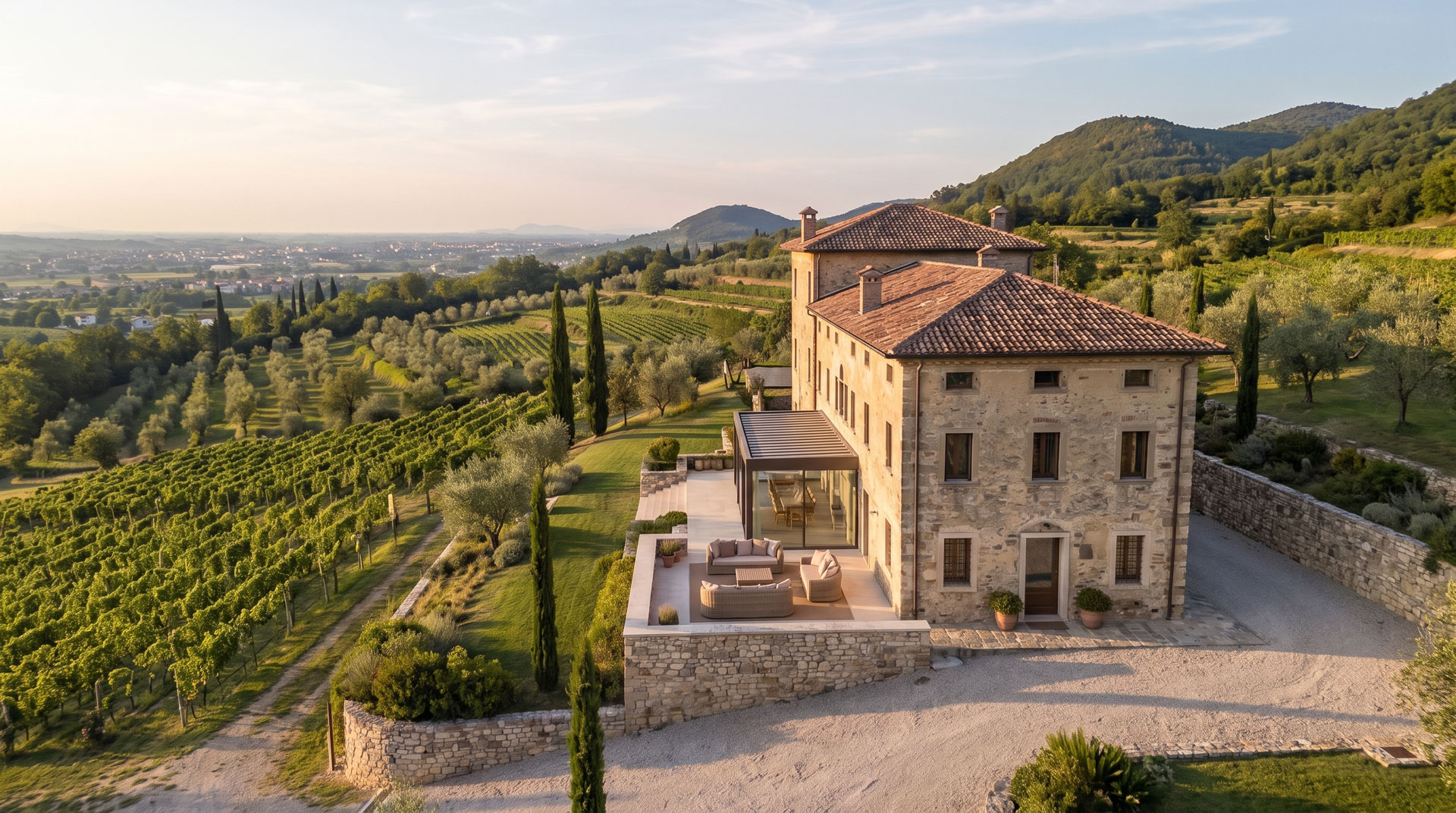
One of the most distinctive real-estate stories of 2026 is unfolding not in Milan's financial towers but across the historic estates of Tuscany, Umbria, Piedmont and Lazio.As tax residency decisions and UNESCO-listed landscapes increasingly become the same conversation, Italy's built heritage is emerging as an asset class defined by genuine, state-protected scarcity.
A market built on something that cannot be replicated
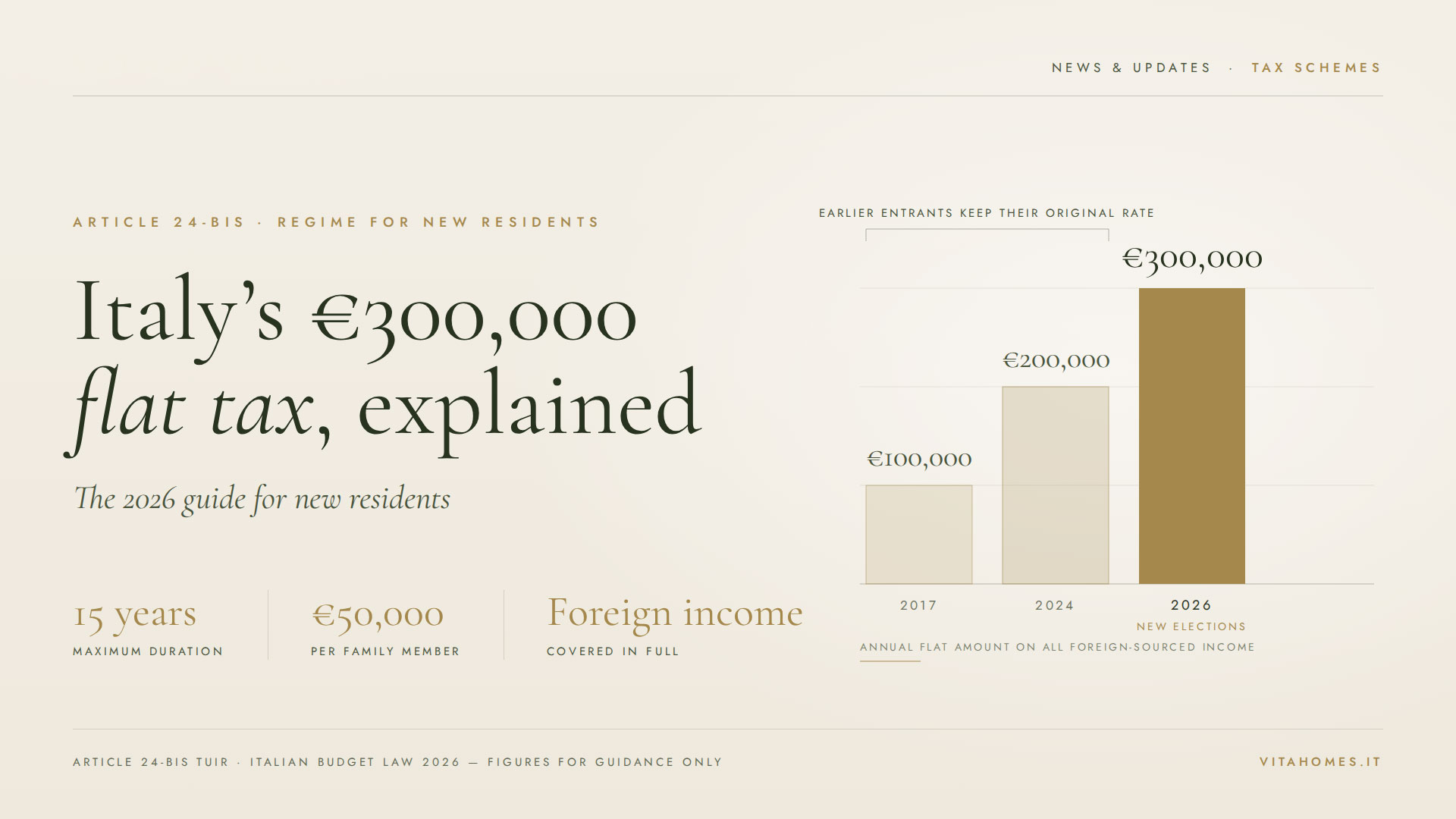
For a high-net-worth buyer, a restored Renaissance villa or noble palazzo offers what a new-build penthouse cannot: authenticity that is protected by the state itself.Wealth-migration data from Henley & Partners already ranks Italy among the top global destinations for millionaire inflows, driven heavily by the flat-tax regime and by UK departures. The notable shift for 2026 is where that capital is landing — increasingly in heritage property rather than conventional prime stock.
Italy's heritage stock, by the numbers
The depth of Italy's historic building stock is what gives this trend its staying power. Roughly a quarter of the country's total building stock — around 3 million structures —predates 1945. Of these, approximately 46,000 privately owned listed buildings account for an estimated 17% of Italy's protected cultural capital. In other words, the supply of genuinely historic, privately ownable property is finite and cannot be manufactured.
The restoration premium
Quality restoration is rewarded in the market. According to Sotheby's International Realty Italy data ,a well-restored and technologically updated historic property can command a premium of roughly 10–20% over a comparable unrestored building. This is the core of the heritage thesis: the scarcity of the asset, combined with the craftsmanship of a sensitive restoration, protects value in a way speculative momentum cannot.
Why heritage protection preserves value
UNESCO status and listed-building protections cut both ways. They impose longer approval timelines and the mandatory use of licensed restoration architects, but they are also exactly what preserves long-term value and exclusivity. A landscape that cannot be built over, and a building that cannot be replicated, are the ultimate guarantees of scarcity — and scarcity, in prime property, is what endures.
Discover what VitaHomes isbuilding next
The philosophy behind every VitaHomes residence is the faithful restoration of Italy's built heritage, paired with contemporary living and a complete ecosystem of services that makes ownership effortless. Explore our upcoming projects and see how heritage becomes home.
Sources &disclaimer. Figures reflect Italian 2026 Budget Law provisions on Article24-bis and are drawn from the Henley & Partners Private Wealth MigrationReport 2026 and publicly available Italian tax summaries. This article isprovided for general information only and is not tax or legal advice; always consult a qualified Italian professional.
More news
View all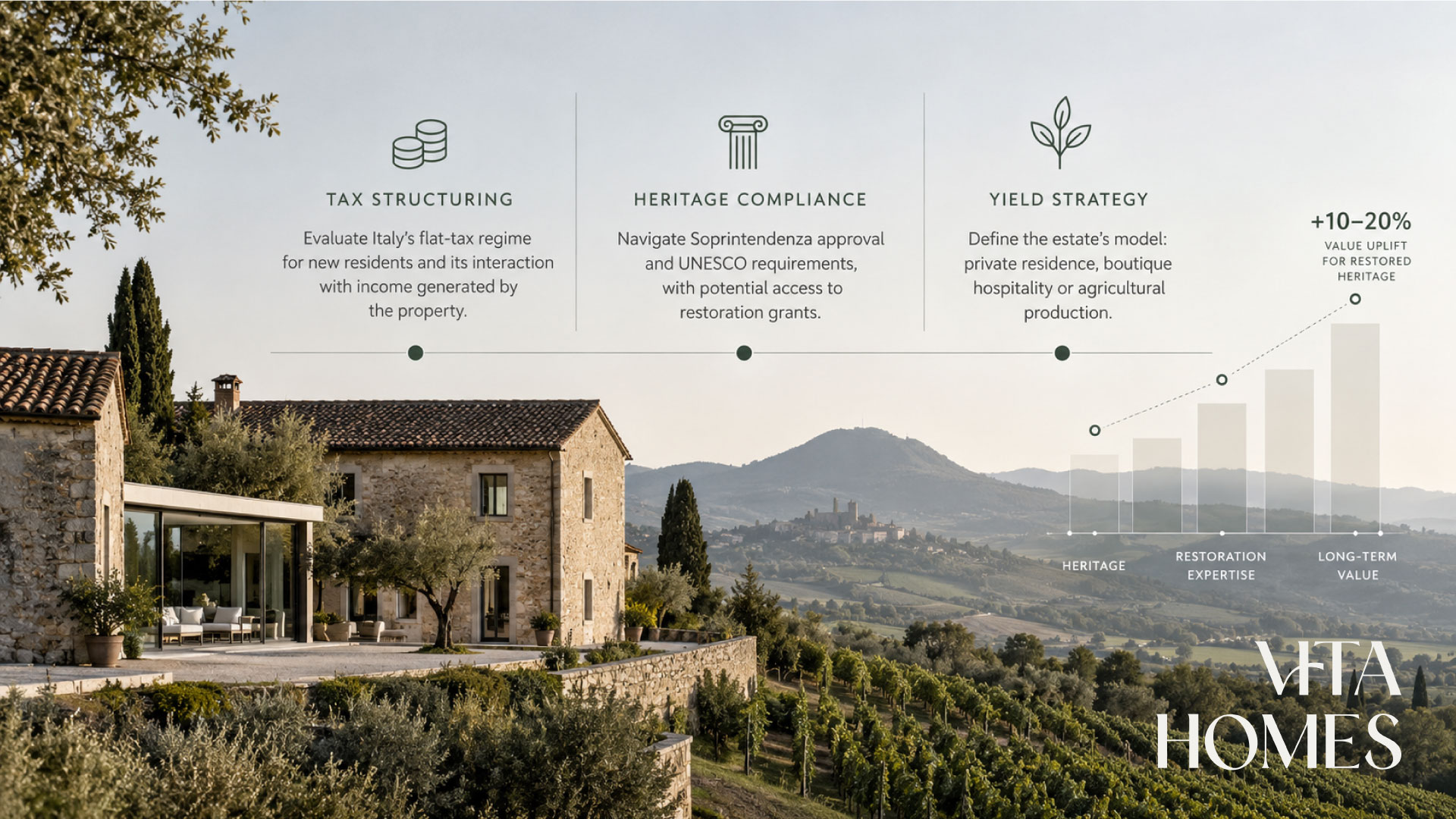
Heritage as a Working Asset: Restoring Historic Italian Estates in 2026
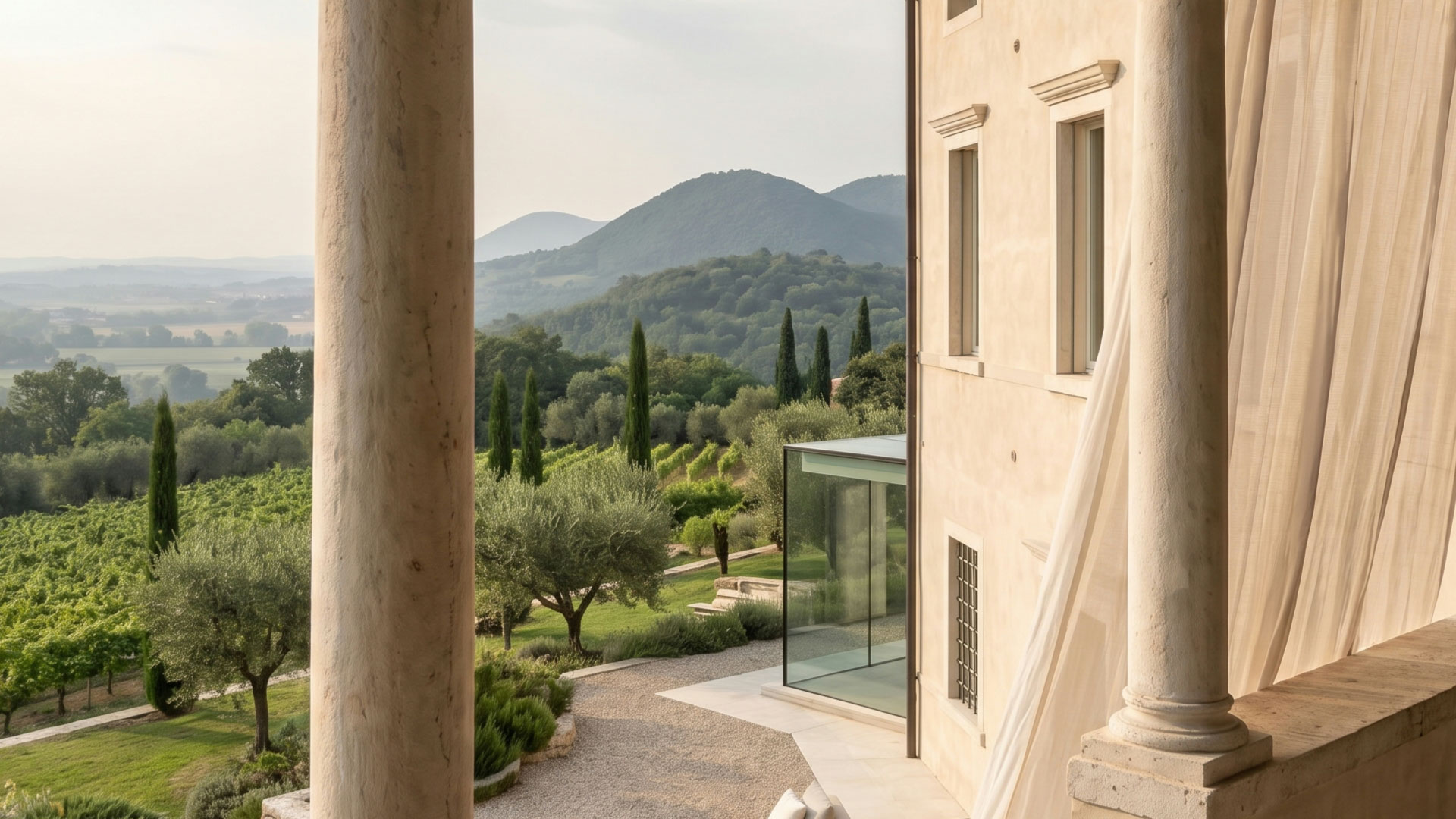
The most significant shift in Italian heritage property in 2026 is not about price — it is about purpose. Historic estates are no longer bought purely as private retreats. Increasingly, restoration is framed as an entrepreneurial strategy as much as an aesthetic one, and that changes everything about how these properties are chosen, restored and owned.
contact us
.avif)