Heritage as a Working Asset: Restoring Historic Italian Estates in 2026
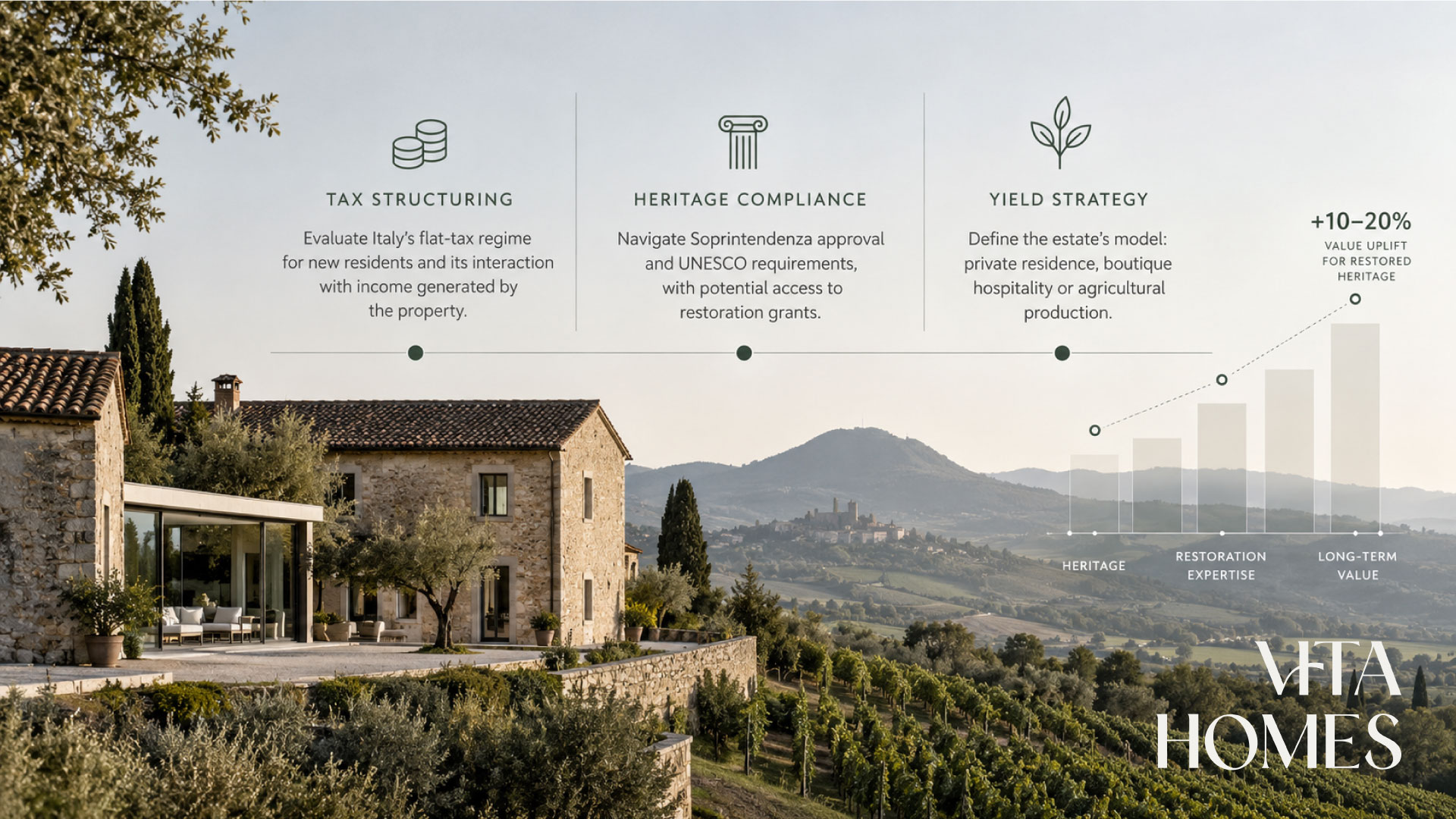
The most significant shift in Italian heritage property in 2026 is not about price — it is about purpose. Historic estates are no longer bought purely as private retreats. Increasingly, restoration is framed as an entrepreneurial strategy as much as an aesthetic one, and that changes everything about how these properties are chosen, restored and owned.
From private retreat to working asset
The majority of historic estates now generate revenue through some combination of boutique hospitality, events and agricultural production — wine, olive oil and truffles among them — with a meaningful share of these properties deriving most of their income directly from the land itself. A restored farmhouse or noble estate can be a home, a business and a legacy at once. That reframing turns a heritage purchase from a single decision into a layered one.
The three-part decision behind a heritage purchase
1. Tax structuring
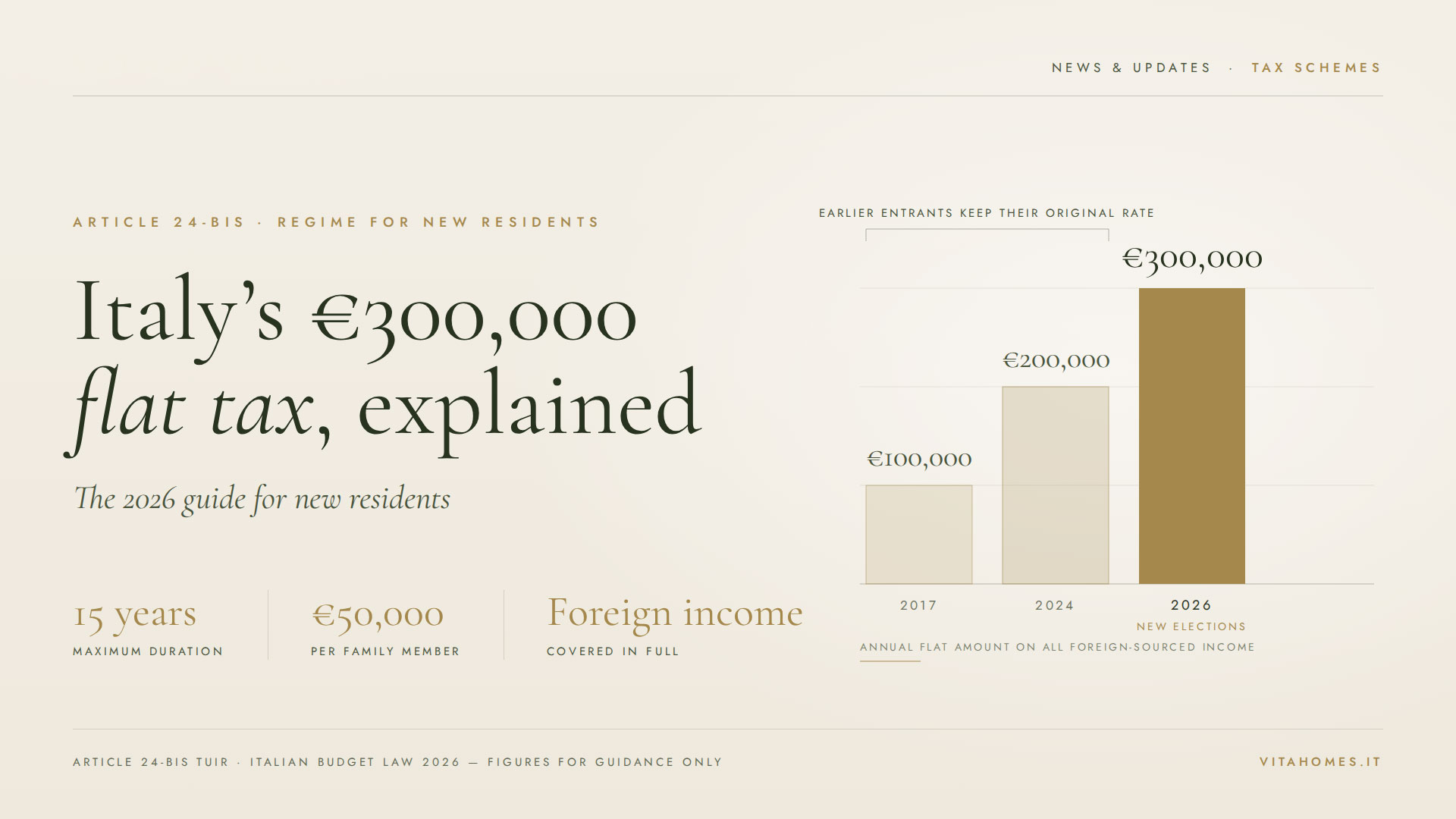
The first question is whether to elect into Italy's flat-tax regime for new residents and how it interacts with income generated by the property itself. The flat tax shields foreign-sourced income, but money earned inside Italy — from a vineyard, a rental operation or an events business — is taxed under ordinary Italian rules. Getting this interaction right is foundational to the whole plan.
2. Heritage compliance
Restoration on listed buildings typically requires approval from the Soprintendenza, Italy's heritage authority. Properties within UNESCO buffer zones may qualify for restoration grants, but they also face stricter constraints on materials and permitted alterations. Due diligence here is materially more complex than for a standard new-build purchase, and timelines are longer.
3. Yield strategy
Finally, the owner must decide what the estate is: a private residence, a boutique hospitality asset, or an agricultural business. Each path carries different licensing, staffing and tax implications, and the choice should be made early because it shapes the restoration itself — from the layout of guest accommodation to the provision for a working cellar.
Why restoration expertise is non-negotiable
On a protected building, the quality and legality of the restoration are inseparable. Listed properties demand licensed restoration architects who can navigate the Soprintendenza, source appropriate materials and preserve original proportions while introducing contemporary comfort. Done well, this is precisely what earns the 10–20% premium that restored heritage commands over unrestored stock; done poorly, it can stall a project for years. This is why the right partners matter more here than in almost any other segment of the market.
Off-market is the norm at the top
The most significant heritage properties — frescoed salons, centuries-old vineyards, irreplaceable views — are rarely listed publicly. They move through private advisory networks, which has real implications for how buyers should search, and for how carefully title and heritage status must be verified. Access and trusted representation, in this market, are as valuable as the capital itself.
The VitaHomes approach
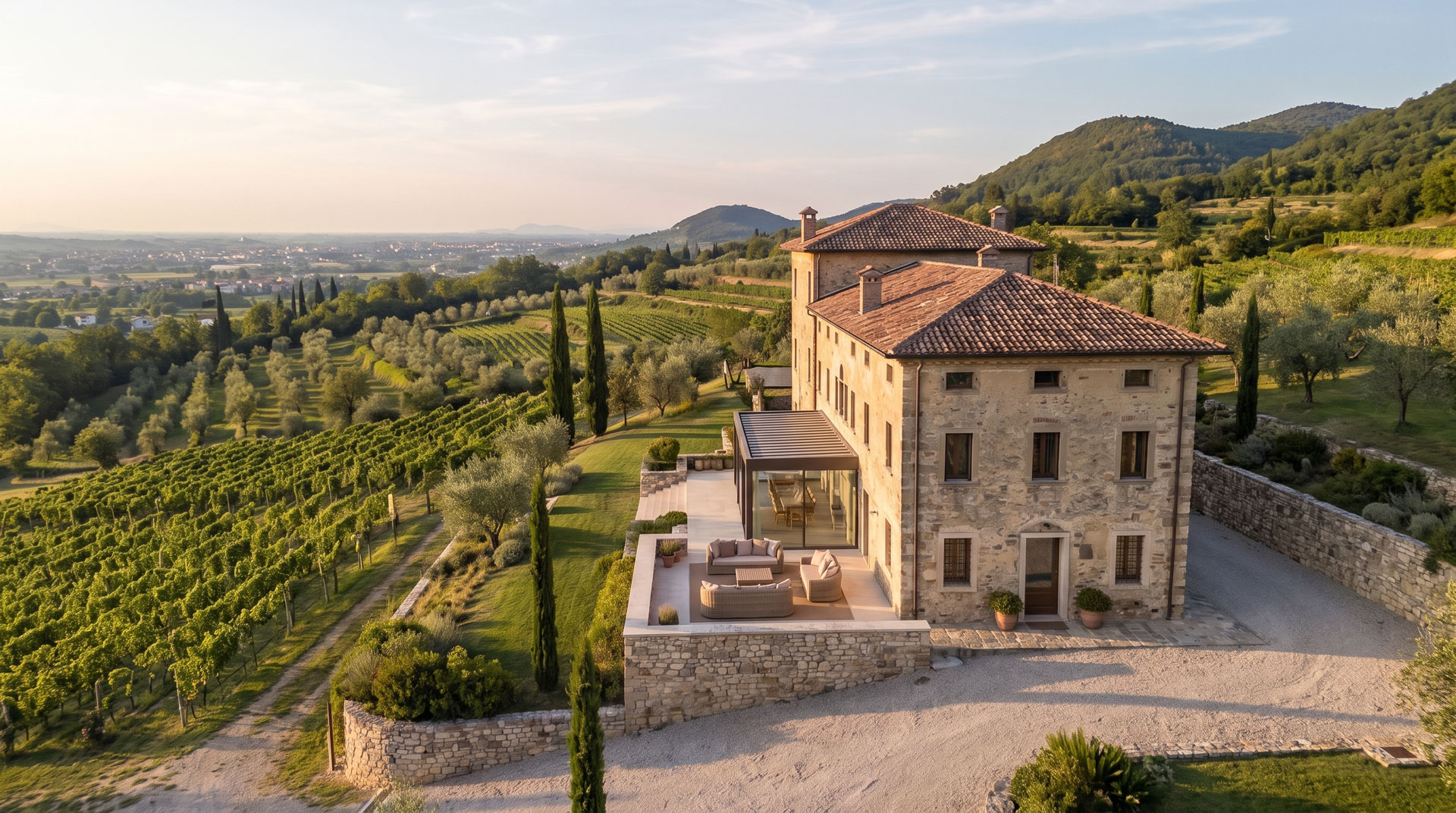
This is the space in which VitaHomes operates. Each residence begins with the faithful restoration of an existing building — recovering the original rustic structures in their true dimensions and using local stone — before a contemporary architectural language is introduced within them. The result is a home where restored exteriors and modern interiors become one with the surrounding hills. Around that, a complete ecosystem of services — design coordination, property management, maintenance, administration and local support — turns a complex heritage project into effortless ownership.
Discover what VitaHomes is building next
The philosophy behind every VitaHomes residence is the faithful restoration of Italy's built heritage, paired with contemporary living and a complete ecosystem of services that makes ownership effortless. Explore our upcoming projects and see how heritage becomes home.
Sources & disclaimer. Drawn from the Henley & Partners Private Wealth Migration Report 2026, Italian 2026 Budget Law provisions, and Sotheby's International Realty Italy market data. Provided for general information only; heritage restoration and tax matters require qualified Italian professional advice.
More news
View all
City Buildings vs. Hill Villas: The Real Summer Temperature Gap
European data on the urban heat island effect, Alpine and Mediterranean lapse rates, and traditional courtyard design — why hill villas run cooler than city buildings.
contact us
.avif)